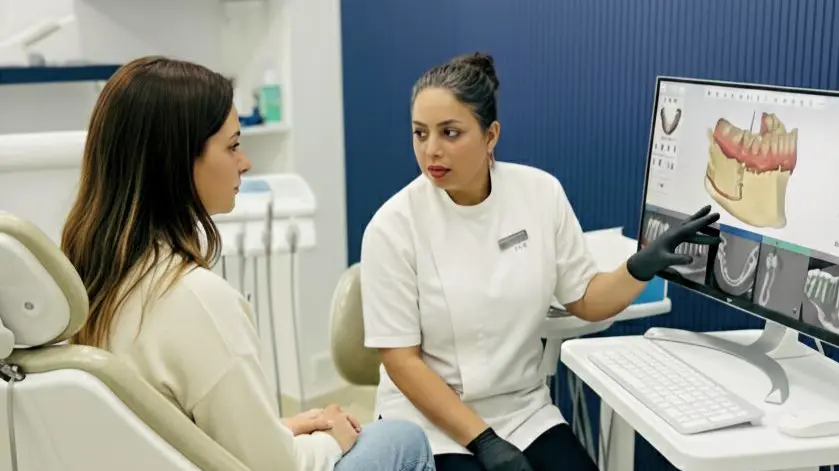
Let me be straight with you. As a prosthodontist who has placed over 10,000 implants in 16+ years, I get this question every single day: “Doctor, is it safe? What can go wrong?”
That is a smart question. You deserve a complete, honest answer — not a reassuring brochure. So let me walk you through every real risk, how we prevent each one, and why the doctor you choose makes all the difference.
If you are still deciding whether implants are right for you at all, first read our overview of how dental implants work — it will give you the foundation to understand this guide better.
Are Dental Implants Really Safe? Let Us Look at the Numbers
Yes. Dental implants are extremely safe when done correctly by a trained specialist.
Studies consistently report a success rate of 95–98% at the 10-year mark. That is better than most medical procedures. But like any surgery — some risk always exists.
The good news? Most implant complications are minor, manageable, and often preventable with the right planning and the right doctor. Read a balanced view of dental implant pros and cons to get the full picture. And if you have specific concerns, our guide covers everything that can go wrong with dental implants.
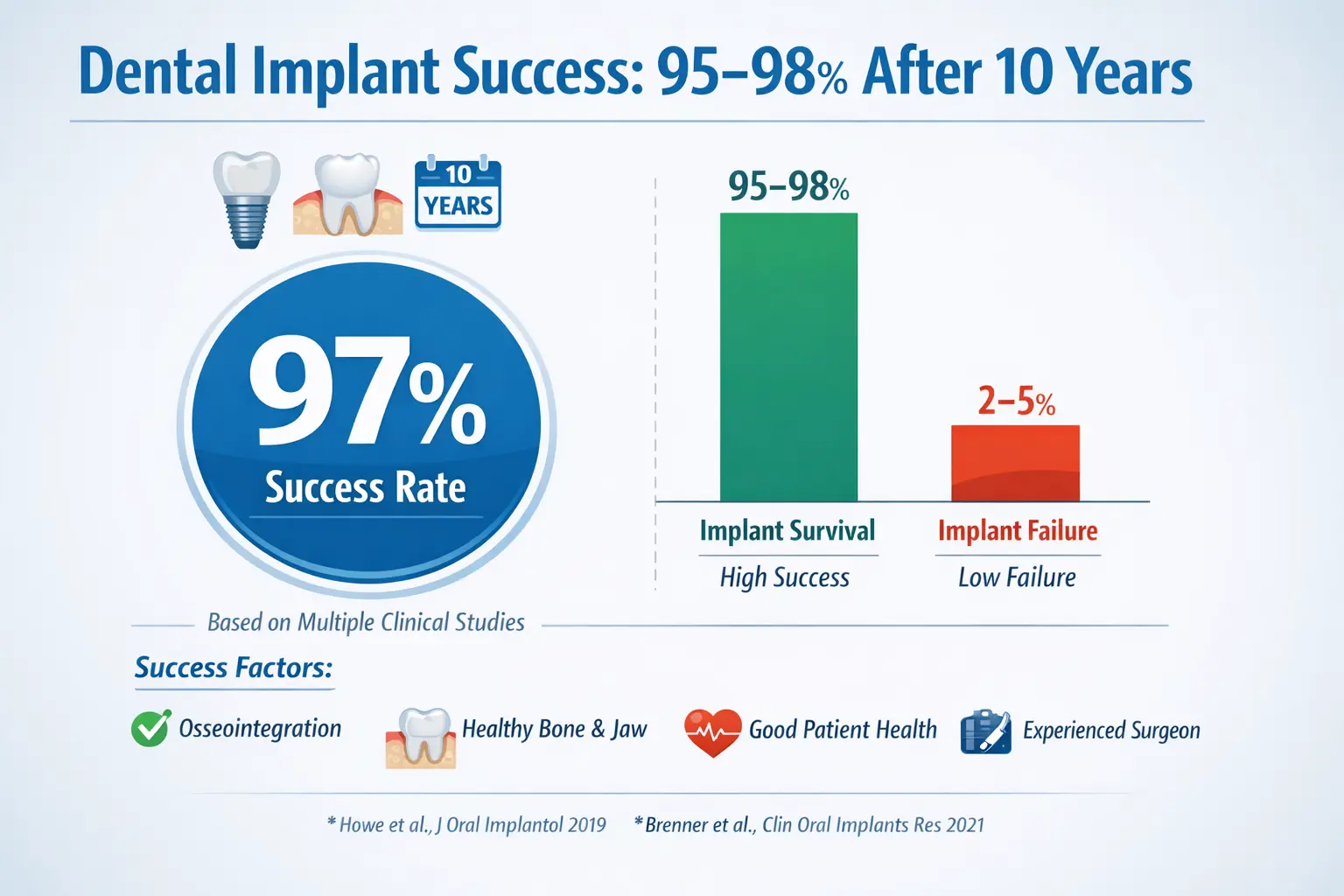
Dental implants have one of the highest success rates in all of dentistry.
Dental Implant Risks You Should Know About
Here are the real risks — explained plainly, without hiding anything.
Infection at the Implant Site
Infection can happen after any surgical procedure. With implants, the area around the implant can get infected — this is called peri-implantitis. It is essentially gum disease around the implant.
How we prevent it: Strict sterile technique during surgery, prescribed antibiotics, and clear post-op care instructions. We screen for gum disease before every case. Read: understanding peri-implantitis.
Occurs in: ~5–10% of cases if maintenance is poor
Implant Failure (Not Fusing with Bone)
Sometimes the implant does not fuse properly with the jaw bone — failure of osseointegration. The implant feels loose and comes out easily and painlessly.
A replacement can usually be placed once bone heals (3–6 months). Read: how to fix a failed dental implant.
Risk factors: Smoking, uncontrolled diabetes, poor bone quality.
Nerve Damage
The lower jaw has an important nerve — the inferior alveolar nerve. If an implant is placed too close to it, you can feel tingling, numbness, or pain in the lip, chin, or teeth.
How we prevent it: CBCT 3D imaging maps the exact nerve position before surgery. Read how 3D imaging transforms implant planning. This risk is almost entirely preventable with proper technology.
Very rare when CBCT planning is used
Sinus Problems (Upper Jaw)
Your upper back teeth sit very close to the sinus cavities. An implant placed too long can enter the sinus and cause infections, headaches, or blockage.
How we prevent it: CBCT planning shows exact sinus boundaries. When bone height is insufficient, we do a sinus lift first. We also use computer-guided implant surgery for upper jaw cases to eliminate errors.
Bone Loss Around the Implant
Over time, poor oral hygiene or gum disease can cause bone to slowly recede around the implant, weakening its support.
If you already have bone loss, read: can I get dental implants with bone loss and how implants stop further jaw bone loss.
Injury to Nearby Teeth or Blood Vessels
In rare cases, the implant drill can come too close to an adjacent tooth root or blood vessel, causing bleeding or damage.
Prevention: Surgical guides direct the drill within 0.5mm of planned position. See: guided implant placement process. In some situations an implant-supported bridge may be a safer design option — we discuss this openly.
Medication and Medical Condition Interactions
Certain medications and conditions interfere with healing:
- Bisphosphonates (for osteoporosis) — affect bone healing
- Blood thinners — affect surgical bleeding
- Steroids — may slow healing
- Uncontrolled diabetes — reduces healing significantly. See: diabetes and dental health
- Active chemotherapy — lowers immunity and bone healing
Pre-surgery reading: checks before dental implant surgery and what to do before getting dental implants.
Peri-Implantitis (Long-Term Gum Infection)
Bacteria build up around the implant causing gum inflammation, bone loss, and eventually implant failure.
Key fact: Peri-implantitis affects roughly 20% of implant patients — mostly those who skip maintenance visits. (Journal of Dental Research, 2022)
Read: gingivitis vs. periodontitis, early signs of gum disease, and tips for healthy gums.
Who Should Avoid Dental Implants — or Wait Before Getting Them?
Not everyone is an equal candidate. At our clinic, we say no when we must. That is clinical honesty — and it is exactly what distinguishes a trained dental specialist from a general dentist offering implants as a side service.
Higher Risk — May Need to Wait or Prepare
- Heavy smokers — 3x higher failure rate. See: how smoking damages teeth and implants
- Uncontrolled Type 2 diabetes
- Severe bone loss without grafting
- Active gum disease (untreated) — see gum recession treatment and gum surgery in Gurgaon
- Long-term bisphosphonate use
- Radiation therapy to jaw area
- Compromised immune system
- Very young patients (bone still growing)
Good Candidates Generally Are
- Non-smokers or those willing to quit
- Controlled diabetics (HbA1c < 7.5) — diabetic dental care tips
- Adequate bone density, or willing to do a bone graft for implants
- Healthy, treated gums
- Committed to annual maintenance
- No contraindicated medications
- Adults with fully developed jaw bone
Our approach: We assess your bone with CBCT, review full medical history, and give you an honest opinion. If implants are not yet right for you, we outline a path to get there. Explore all ways to replace a missing tooth and best solutions for missing teeth if implants are not suitable yet.
Smoking and Diabetes: The Two Biggest Risk Factors
Smoking and Dental Implants
- Smokers have a 2–3 times higher implant failure rate
- Nicotine reduces blood flow to bone — slowing the healing process
- Smoking increases infection risk significantly
- Even moderate smoking affects osseointegration
Read: the hidden consequences of smoking on teeth and implants.
Our advice: Stop smoking at least 2 weeks before surgery and 6–8 weeks after. Ideally — quit for good.
Diabetes and Dental Implants
Controlled diabetics (HbA1c under 7.5%) can safely get implants with excellent outcomes. A 2023 meta-analysis showed implant survival rates in well-controlled diabetics were comparable to non-diabetics. (Clinical Oral Implants Research, 2023)
Read: the connection between diabetes and dental health and diabetic dental care tips.
When Is Risk Highest? Understanding Implant Healing Stages
Most risks concentrate in the first 3–6 months — when bone is integrating with the titanium implant.
Read our full breakdown of dental implant healing stages and compare immediate vs. delayed implant placement — each has different risk profiles.
Highest infection risk. Follow antibiotic regimen strictly. No smoking.
Osseointegration in progress. Soft diet. No pressure on the implant.
Bone matures. Crown fitted. Risk drops significantly after this stage.
Annual maintenance keeps peri-implantitis away. Implant can last a lifetime.
How We Minimise Implant Risks at Our Clinic in Gurgaon
Risk reduction starts long before the first drill touches your bone.
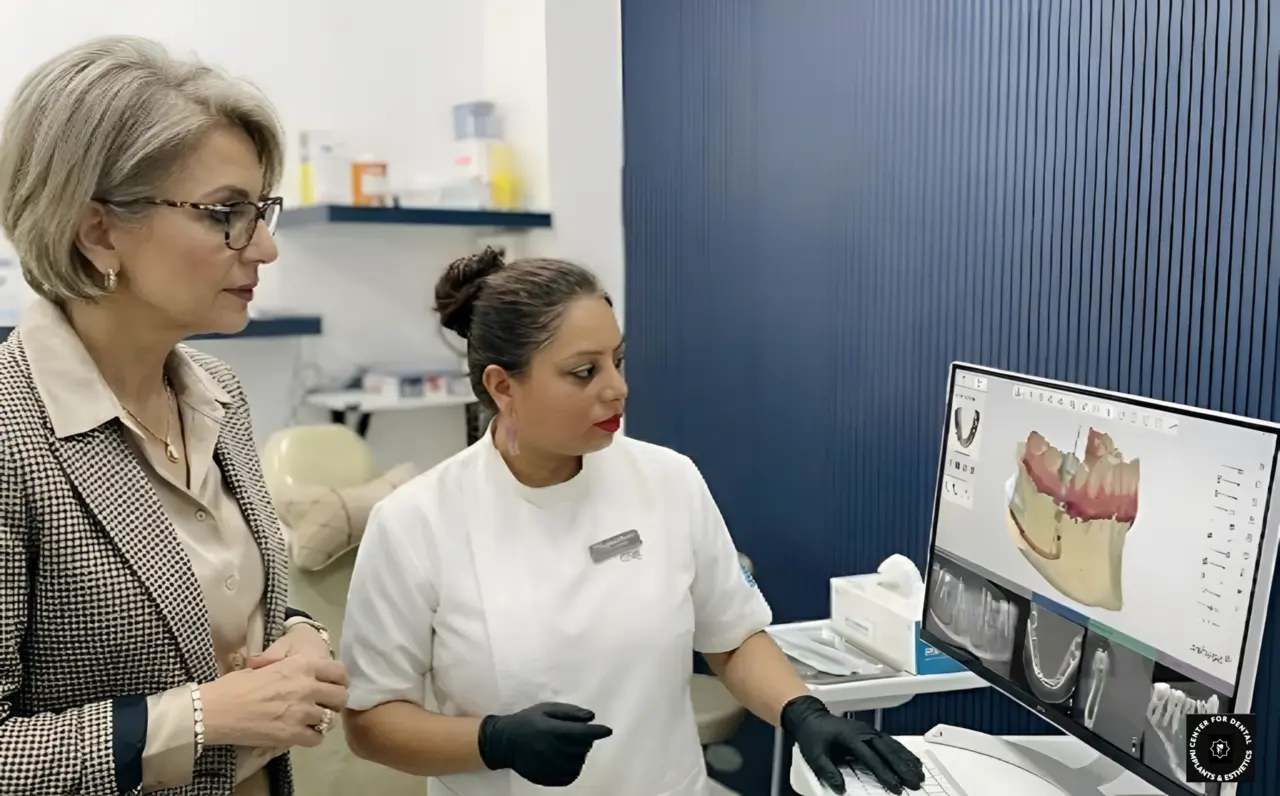
Every case is planned digitally using CBCT 3D imaging — before surgery begins.
Complete Medical & Bone Assessment
We review all medications, blood reports, and full medical history. We order a CBCT 3D scan to assess bone volume, density, nerve position, and sinus floor. Read how 3D imaging transforms implant outcomes.
Prosthodontic-Led Planning First
We plan the final teeth first, then decide implant position. Bite, aesthetics, and load distribution are engineered from day one. This is the foundation of every full mouth dental implant case we handle. An implant is not just a screw — it is long-term bite engineering.
Gum & Bone Treatment Before Surgery
We never place an implant in an unhealthy mouth. Gum disease is treated first — including gum surgery in Gurgaon when needed. If bone volume is low, we do a bone graft for implants first. See bone graft cost in Gurgaon.
Sterile Surgical Protocol
Surgery happens in a fully sterile environment with antibiotics before and after. We follow international infection control standards — same as hospital OT.
Guided Implant Placement for Complex Cases
For cases near nerves or sinuses, we use computer-guided surgical stents that direct the drill within 0.5mm of planned position. Critical for All-on-4 and All-on-6 implant cases.
Structured Follow-Up and Annual Maintenance
Follow-ups at 1 week, 3 months, 6 months, then annually. These catch early signs of peri-implantitis or bone changes before they become serious. Skipping maintenance is the top cause of preventable failure.
How Will I Know If My Dental Implant Is Failing?
This is one of the most common questions we receive. Here are the warning signs:
- Implant feels loose or wobbly — at any stage, this is a red flag
- Pain or discomfort around the implant that was not there before
- Swelling, redness, or bleeding around the implant site
- Difficulty chewing on the implant side
- Visible bone loss on X-ray during a maintenance check
If you notice any of these signs, contact your implantologist immediately. Early intervention saves implants. Read: how to fix a failed dental implant and everything that can go wrong with dental implants.
What Happens After an Implant Fails?
If an implant fails to integrate (roughly 2–5% of cases), it becomes loose and comes out on its own — usually without pain.
- Area is allowed to heal for 3–6 months
- Cause is identified and corrected
- Replacement implant is placed — with a high success rate
Our implant brands carry a lifetime replacement warranty on the implant fixture. Compare: implant brand comparison and read does the implant brand actually matter.
Myth vs. Fact: Common Fears About Implant Risks
“Implants fail after a few years.”
With proper care, implants last 25–30 years or a lifetime. Read: types of dental implants and single-piece vs. two-piece implants.
“If bone is less, implants cannot be done.”
Bone loss is addressable with bone grafting. Extreme cases can use zygomatic implants. See bone graft cost in Gurgaon.
“Cheaper implants have the same results.”
Read: low-cost implants in Gurgaon — the real story and the truth behind cheap dental implants.
“Teeth in a day means zero risk.”
“Teeth in a day” is a loading protocol — not a shortcut on quality. Read: teeth in a day — myth or reality and compare All-on-4 vs. All-on-6.
“MRI scans are dangerous with dental implants.”
Titanium is non-magnetic. Standard dental implants are MRI-compatible. Read: dental implants and MRI compatibility.
“Any dentist can place implants safely.”
Implants placed without proper training dramatically increase risk. Read: what makes a dental specialist different and how to choose the right implantologist.
Why Would a Dentist Not Recommend an Implant? (And Why We Follow That Rule)
A good implantologist sometimes says no — or says “not yet.” This happens when:
- Bone volume is insufficient and graft has not been done yet
- Gum disease is active and untreated
- Blood sugar is not controlled
- Patient is on medications that interfere with healing
- Systemic health is too compromised for surgery
We do not use basal implants — heavily promoted shortcuts that lack long-term evidence. We have written the full story:
- Basal implants vs. conventional implants — full comparison
- Why you should avoid basal dental implants
- Basal implant failure rate — what the data shows
We believe in evidence-based implantology. See which brands we trust: comparison of implant brands in India.
What If Implants Are Not Suitable for You Right Now?
If implants are not the right fit yet, you still have good options. We never leave you without a clear path forward.
Dental Bridge
A fixed option using adjacent teeth as anchors. Dental bridges in Gurgaon. But also read 6 reasons to avoid dental bridges.
Dentures
Dentures in Gurgaon including BPS precision dentures. Compare: implants or dentures?
Implant-Supported Options
Why implant bridges beat conventional dentures and All-on-4, All-on-6, All-on-8 explained.
Full overview: 10 reasons why missing teeth must be replaced and removable vs. fixed teeth — full comparison.
What Does a Safe, Well-Planned Implant Cost in Gurgaon?
Risk and cost are connected. Cutting corners usually means higher costs when things fail. For transparent, up-to-date pricing:
- Dental implant cost in Gurgaon
- Single tooth implant cost in India
- Full mouth implant cost in Gurgaon
- Bone graft cost in Gurgaon
- Are full mouth implants worth the investment?
Have more questions? Our complete dental implant FAQ answers the most common patient questions before committing to treatment.
Frequently Asked Questions: Dental Implant Risks
Side Effects & Safety
What are the negatives of dental implants?
Dental implants are highly successful but do have some downsides. They require surgery, which carries a small risk of infection, nerve effects, or sinus issues. They cost more upfront than bridges or dentures. Healing takes 3–6 months. And in patients with poor bone, diabetes, or heavy smoking, the success rate drops. That said, for most patients the long-term benefits — permanent, natural-feeling teeth — far outweigh these drawbacks. Read: dental implant pros and cons.
Can a dental implant cause problems years later?
Yes — but this is uncommon and usually preventable. Peri-implantitis (gum infection around the implant) is the most common long-term issue, affecting around 20% of patients who skip maintenance. Bone loss around the implant can also occur over years if hygiene is poor. The implant itself — the titanium root — very rarely fails after the first year. Annual check-ups and professional cleaning eliminate most long-term problems. Read: understanding peri-implantitis.
What are the disadvantages of a tooth implant?
The main disadvantages are: higher upfront cost compared to bridges or dentures, the requirement for surgery and a healing period of 3–6 months, and the need for sufficient bone volume (a bone graft may be needed if bone is low). Not every patient is a suitable candidate — smokers, uncontrolled diabetics, and patients on certain medications need extra assessment. See: bone grafting for implants and all ways to replace a missing tooth.
How risky is a dental implant?
Dental implant surgery carries a 95–98% success rate, making it one of the most predictable procedures in dentistry. Serious complications are rare. Minor issues — like temporary soreness, swelling, or minor infection — can occur but are easily managed. The risk increases significantly with smoking, uncontrolled diabetes, poor bone quality, and an inexperienced operator. With a trained specialist and proper planning, the procedure is considered low risk.
Who should avoid dental implants?
You should avoid or delay implants if you are: a heavy smoker who will not quit, have uncontrolled diabetes (HbA1c above 8), have active untreated gum disease, are on bisphosphonate medications for osteoporosis, have received radiation therapy to the jaw, or are very young with bone still developing. These are not permanent disqualifications — most can be addressed with preparation. Read: checks before dental implant surgery.
Safety & What to Know Before
Why would a dentist not recommend a dental implant?
A responsible dentist says no — or “not yet” — when the conditions are not right. This includes: insufficient bone without grafting, active gum disease, uncontrolled blood sugar, bisphosphonate use, current chemotherapy or radiation, heavy uncontrolled smoking, or medical conditions that compromise healing. Saying no in these situations protects you from a preventable failure. At our clinic, we assess all of this before recommending any treatment.
What is the 3-2 rule for dental implants?
The 3-2 rule is a clinical guideline used in implant planning. It refers to maintaining at least 3mm of bone above a nerve or sinus and 2mm of bone between an implant and an adjacent tooth or structure. Following this rule prevents nerve damage, sinus complications, and damage to neighbouring teeth. This is precisely why CBCT 3D planning is not optional — it is mandatory in our protocol. Read: the role of 3D imaging in dental implants.
What I wish I knew before dental implants?
Most patients wish they had known: that healing takes 3–6 months (not days), that smoking dramatically increases failure risk, that a bone graft may be needed before the implant, that annual maintenance is not optional — it is what makes implants last a lifetime, and that the implant brand and surgeon’s experience matter far more than the price. Read our full pre-surgery guide: what you must know before getting dental implants.
Avoiding & Fixing Implant Failure
How will I know if my dental implant is failing?
Warning signs of a failing implant include: the implant feeling loose or moving, unexplained pain or discomfort around it, swelling or bleeding at the implant site, difficulty chewing, a bad taste or smell near the implant, and gum recession around the implant. If you notice any of these, contact your implantologist immediately. Early intervention can save the implant. Read: how to fix a failed dental implant.
How to stop dental implants from failing?
The most effective steps are: quit smoking before and after surgery, control your blood sugar if diabetic, attend all follow-up appointments, brush and floss around implants daily, use an implant-safe interdental brush or water flosser, and never skip your annual professional maintenance visits. Most implant failures are preventable — they happen due to lifestyle factors or neglected maintenance, not random bad luck. Read: understanding peri-implantitis.
Why does my tooth implant hurt after 5 years?
Pain around an implant that was comfortable for years is almost always a sign of peri-implantitis — an infection around the implant causing bone loss. Other causes include the crown (cap on top) cracking or shifting, bite problems, or rarely, a crack in the implant itself. This needs to be evaluated urgently with an X-ray and clinical exam. Do not ignore it — early treatment can save the implant. Book a consultation with an implantologist in Gurgaon.
Can bone reject a dental implant?
Titanium, the material used in dental implants, is biocompatible — the body does not reject it the way it might reject a foreign biological material. What happens in implant “failure” is not true rejection — it is a failure of the bone to fuse around the implant (failed osseointegration). This is caused by poor bone quality, infection, smoking, uncontrolled diabetes, or excessive early loading — not by the immune system rejecting titanium. True titanium allergy is exceptionally rare. Read: dental implants with bone loss.
What is the main reason dental implants fail?
The single biggest cause of early implant failure is poor osseointegration — the bone not bonding to the implant. This is most commonly caused by smoking, uncontrolled diabetes, or infection. The biggest cause of late implant failure (years after placement) is peri-implantitis — a chronic bacterial infection that destroys the bone around the implant, usually from skipped maintenance. Both are largely preventable with the right precautions and follow-up. Read: everything that can go wrong with dental implants and how to fix a failed dental implant.
Have Questions About Your Specific Case?
Every patient is different. The best way to understand your personal risk profile is a one-on-one consultation with Dr. Jyoti Singh. We review your bone, your health history, and give you an honest assessment — no pressure.
We serve patients across Gurgaon from our clinics near Artemis Hospital (Sector 51) and M3M Cornerwalk (Sector 74). Check implant costs or explore our full implant FAQ before booking.
Book a Free Implant ConsultationOr call us: +91 98716 31066

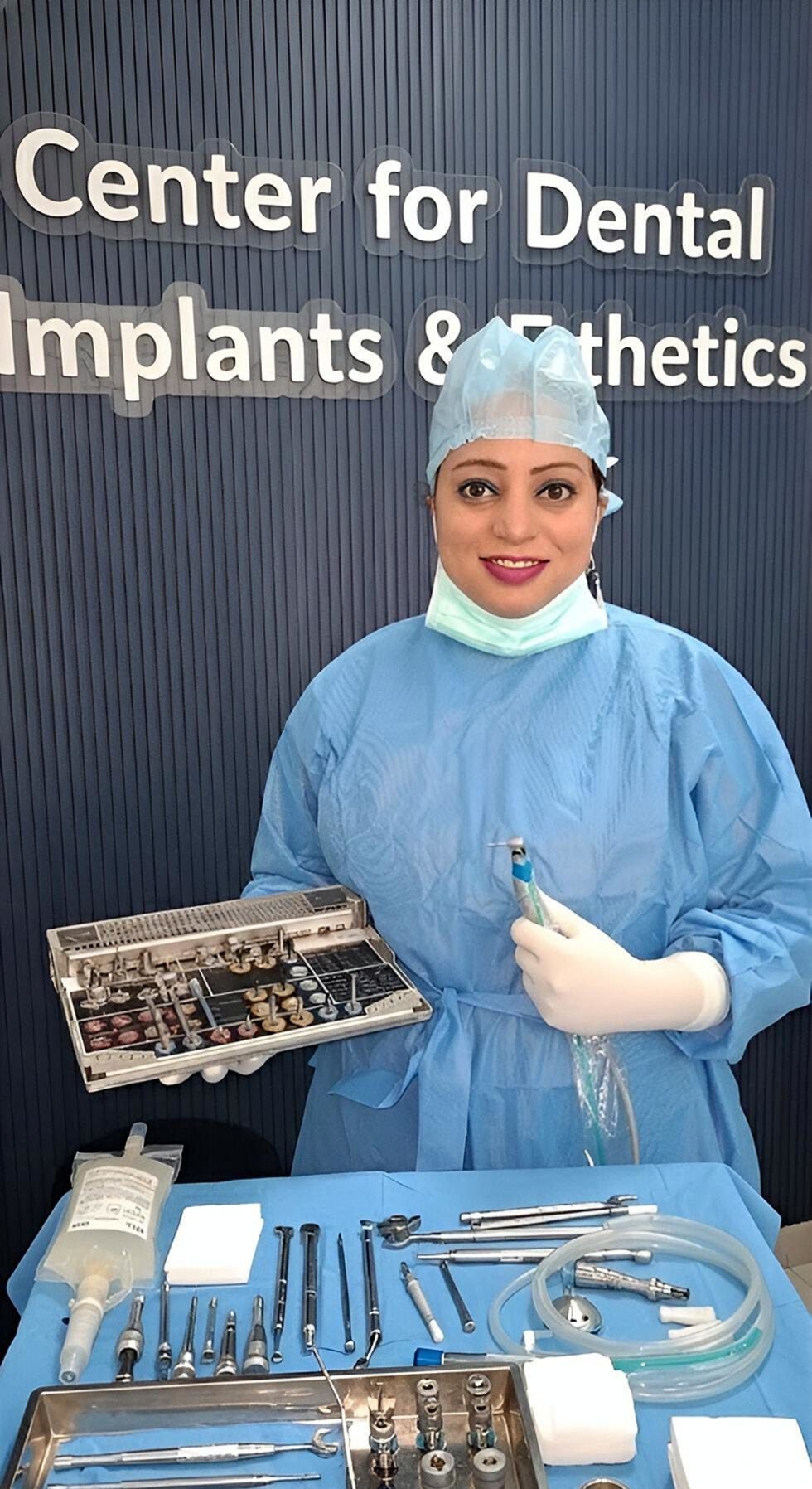
Dr. Jyoti Singh (MDS), Diplomate WCOI (Japan region) Member AAID (American Association of Implant Dentistry) stands as a beacon of excellence in implantology within Delhi NCR region. She is a BDS and MDS(Prostho) both from Maulana Azad Institute of Dental Sciences, where she secured top honors with all India rank 1 in PG entrance examination. Her extensive experience at esteemed institutions like Clove Dental and her own Center for Dental Implants & Esthetics since 2016, Dr. Singh embodies unparalleled expertise in dental implants. Boasting a wealth of 17+ years in dentistry and backed by 18 groundbreaking research papers in leading international journals (Google Scholar) and her ResearchGate profile, she epitomizes the pinnacle of proficiency and innovation in her field. She practices in Gurugram as your friendly dentist near me.